Are you missing out on ways that you can start ageing outrageously well ?

Are you missing out on ways that you can start ageing outrageously well ?

70 may be the new 50 but its possible that it won’t be that enjoyable if you haven’t looked after your physical health. Over the last decade through global challenges, like the Covid pandemic and personal challenges like three rounds of surgery I have been researching how to age well and there are some common themes.

In 2016 I was able to do the training on the Recode protocol, which was developed by Dr Dale Bredesen. The training was run in San Francisco (which was a very good reason for enrolling as well as the content) and involved looking at thirty six points of intervention based on the five major triggers for Alzheimers. Dr Bredesen has subsequently completed two case study series and more recently a clinical trials for his protocol and it is showing improvement in over 80% of cases who had been classified as having mild cognitive impairment (1). For more information on the protocol have a look at the blog on Delaying Alzheimer’s .

In Melbourne in 2018 Dr Terry Wahl’s presented her strategies for managing Multiple Sclerosis and neurodegenerative diseases and I have followed her work extensively after that symposium. Her focus in clinical practice is on using food rather than supplements primarily as well as looking at specific types of exercise that can support recovery. Dr Wahl is a neurologist who was in a tilt wheelchair with her advanced MS and is now back to riding her bike. Her programs have been implemented at the Iowa City Veteran’s Affairs Hospital and she has conducted four clinical trials on the program. To date the trials are showing significant improvements in fatigue scores and quality of life. Key features of her program involve balancing blood sugar and flooding the body with nutrients from whole foods, in particular up to 9 cups of vegetables and fruit a day plus good quality protein. Her program really encourages the use of organ meats, like liver, for good levels of key nutrients which are quite expensive as supplements. In particular CoQ10 which is essential for energy production in your cells.

There are six key areas that you need to consider in order to age outrageously well.

  1. Eat your vegetables! Flooding your body with nutrients in a form that you are best designed to absorb. Make sure you are eating the rainbow with vegetables and including at least one cup of green leafy vegetables, one cup of brassica vegetables and one cup of brightly coloured vegetables daily. If you are trying to add more vegetables to your diet it is always helpful to increase gradually and to look at adding them to snacks, soups and smoothies as well. It can also be a good idea to prepare extra vegetables with dinner and have them ready to add to lunches or soups the next day. Roast vegetables are a particularly tasty way to improve the vegetable content of your lunch and you can add them to spinach leaves in a salad or blend them with bone broth for an easy and quick soup.
  2. Balance your Blood Sugar ideally by including protein with every meal and minimising your intake of sugary foods and simple carbohydrates like bread and cereal. You do not need to be eating large quantities of protein but rather a palm size amount at each meal over the day. Adequate protein for most people would involve 2 eggs at breakfast, a small can of tuna with lunch and a chicken breast fillet at dinner. At the same time it’s important to include some carbohydrate in the diet as well but optimally it’s from whole foods and provides a slow release of glucose and a good serve of fibre as well. If you struggle to add enough protein then adding a protein shake or smoothie can be a good way to up it daily. Usually I do recommend clean brands, whey protein if you can tolerate it or plant protein for those who like variety. The plant protein options that I find useful at the moment are Nuut, Amazonia and Vital Protein. Nuut is offering sampler packs which is a good way to try a few different flavours. The other two brands are usually available in health food stores and the fermented split pea protein from Vital Protein is one of the better vegan options as its not grainy.
  3. Exercise regularly and mix it up. Ideally including both strength based training as well as cardio will really assist in maintaining good bone health as well as improving balance and energy levels. Start low and build exercise levels slowly to minimise the risk of injury and setbacks. The simplest and easiest way to start exercising is to walk regularly, starting with a five minute lap of the block and then building up over weeks by adding five minutes each week and then multiple walks per day. On e of my favourite quotes about exercise is from JIm Rohn “Take care of your body its the only place you have to live in”.
  4. Identify the sources of inflammation and manage them as well as possible. Key areas to consider are a history of infections, such as recurring sinusitis, food intolerances and allergies, heavy metal toxicity, sedentary lifestyle and chronic pain from old injuries. There are a wide number of sources of inflammation in the body and dealing with those assaults can be challenging. That’s why quite a number of “anti-ageing” programs remove common allergens like gluten and dairy as anyone with gut problems will have challenges digesting and absorbing nutrients from them. Lactose intolerance is increasingly common as we age as we were really designed to have milk in our diets only as babies and small children. Generally we should be able to absorb small amounts if our digestion is working well. Removing allergenic foods can really assist you in feeling better however test first to make sure its the right foods. For ten years I removed dairy from my diet and whilst it helped a little removing gluten was the game changer for my brain and energy levels.

5. Meditate like a Buddhist monk! Research is showing that twenty minutes of meditation can reduce levels of anxiety, depression and pain (2). Meditation is a relatively inexpensive tool with many apps which can be helpful like Gaia and Calm. Recent research undertaken at a VA hospital in the States showed that twenty minutes of meditation twice a day reduced PTSD symptoms (3). The Wellness experience provide a free thirty day meditation series in either ten minute or twenty minute increments which you can do through the website themeaningoflife.tv . One of the most essential attributes of meditation is its ability to increase grey matter in the brain and assist with clarity and focus.

6. Add appropriate supplements as needed. Look at the key symptoms and determine what is needed for you. For those who are experiencing significant inflammation for example it can be useful to look at supplementing with Tumeric and good quality essential fatty acids. If your issues are more around cramping and low energy then consider adding a magnesium supplement (preferably a powder for better absorption) and a multi vitamin. Just make sure that you do check the use of any supplements with your medications. Your pharmacist or practitioner can advise you on the right dosing and minimise the risk of any interactions.

Interested in more information on Healthy Ageing ? Click on this link https://www.christinepopenutritionist.com/ageing-outrageously for more information on my eight week program.

Christine Pope is a naturopath and nutritionist based at Elemental Health at St Ives and is available for consultations online and in clinic.

1. https://content.iospress.com/articles/journal-of-alzheimers-disease/jad215707

2. https://www.ncbi.nlm.nih.gov/pmc/articles/PMC7287297/

3. https://pubmed.ncbi.nlm.nih.gov/29921143/

Confused by Zucchini? 5 simple ways to use it in meals.

One of the best ways to keep your food budget under control is to eat seasonally. At the moment Zucchini is in season and Harris Farm is offering the imperfect picks known as unruly Zucchini at good prices. So how do you make the best use of Zucchini? One of my favourites is a stir fry with ginger and orange but its also lovely in ratatouille, grated in fritters or chargrilled in salads.

Zucchini is a low carb vegetable with one cup of zucchini providing 3g of carbohydate, 40% of your daily Vitamin A requirements and is a good source of carotenoids such as lutein, zeaxanthin, and beta-carotene. These carotenoids are beneficial for eye health and vision.

A few other options for zucchini recipes from some favourite sites and a few recipes for inspiration;

Gratin with Potato and Zucchini

  • 500g potato sliced thinly
  • 4 small zucchini cut into small rounds
  • 2 red capsicum finely sliced
  • Thyme

In a casserole dish layer zucchini, capsicum and potato. Start with zucchini on the bottom and finish with potato on the top and sprinkle with 2 tsps dried thyme. Cover with lid and cook in over an 180C for up to an hour. Serve as a side with grilled meats or fish.

Stir fried zucchini with ginger and orange

  • 600 g zucchini
  • Small knob of ginger
  • peel of half an orange grated
  • 2 Tblsp Soy Sauce

Cut zucchini into batons. Grate ginger finely and saute lightly for 30 seconds in a wok. Add zucchini and stir fry until soft and a little blackened. Stir through the grated peel and add the soy sauce, stir through for 30 seconds and then serve.

Simple Potato Curry

One tablespoon curry paste,
1 tsp each cumin, mustard, ginger and garlic
One onion
2 potatoes
1 piece sweet potato or pumpkin or 2 carrots
2 red capsicum
1 eggplant
2 zucchini
1 can chopped tomatoes
1 can coconut milk


Add a little oil to the pan and a chopped onion plus the spices. Fry the onion in the spices. Add two potatoes, a quarter pumpkin, two red capsicum (scrub potatoes, don’t peel – less work and better for you). Cut all the vegetables about the same size – for instance, in quarters.

Chop and slice salted eggplant and two zucchini. (Before you use eggplant – slice it, pour salt on it and then after 10 minutes wash it off). Stir this through, add a can of chopped tomatoes, cover for 20 minutes, cook on low heat. Check that the potatoes are getting soft. Add a small can of coconut milk and simmer for a further 5 mins before serving.

Variations: add a bunch of spinach (chopped) or Chinese cabbage a few minutes before it is finished cooking. Leftovers will make another meal with a tin of legumes or chickpeas added.

Christine Pope is a naturopath and nutritionist based at Elemental Health St Ives. Appointments can be made on 02 8084 0081 or elementalhealth.net.au .

Balancing Blood Sugar

Did you join me for my Natural Medicine Week Webinar? If you missed it or want a review of the highlights then click through to the youtube recording or scroll through the powerpoint which is attached below.

In the webinar we cover the following topics;

  • Blood Glucose and insulin how does this work and what does this mean for you?
  • What are the risks from a health perspective of poorly managed blood sugar?
  • Which diet is best able to assist you to manage blood sugar
  • A simple meal plan to help you put it altogether

The webinar recording is linked below.

I

If you have any other queries please pop them in the comments below or book in with Christine on 02 8084 0081. Christine Pope is an accredited naturopath and nutritionist based at Elemental Health at St Ives and is offering both in person and online consultations.

Post Viral Fatigue (and other symptoms)

Most people when they get sick usually find that after the initial illness they probably need to spend one or two days recovering and then they are fine to get on with their work and lives as per usual. For a small percentage after a virus they may find that they are slower to recover and what usually took a few days is now taking a few weeks or months. If you are finding that your recovery is much slower than usual it might be good to review some of the strategies recommended below and see if adopting these assists with your recovery.

There are three main areas to focus on in terms of post viral recovery, namely, rest, immune support and good quality nutrition. In addition if recovery is protracted its a good idea to check with your healthcare practitioner and ensure that there are no other factors which are contributing. For example its not uncommon for women suffering with anemia (low iron) to find it takes a long time to recover from an illness. Another factor that can be problematic is a history of glandular fever as people who have had this virus are more prone to developing post viral fatigue.

REST

Once upon a time when people had a serious illness there was this concept called convalescence. It was expected that people continued to rest and recover after an illness. In today’s world I tend to recommend streaming sessions, find a series online that you enjoyed and rewatch it. A series that you have watched before does not require as much concentration and you can doze on and off without affecting your viewing.

It also important to ensure that even when you feel well enough to return to work you schedule rest into your day, whether it’s a short nap on the couch if you are working from home or just making sure you get out for a break at lunchtime. In this era of constant busyness it can be very hard for people to cut down their workload to allow time for this but adequate rest post virus will reduce the amount of downtime you need.

You may also find that its useful to gradually return to exercise slowly. This might mean starting with short walks of ten minutes and building up gradually, rather than just returning to a full on gym or pilates session. If you are coping with short walks once a day then build to twice a day consistently. However if you do find that heading back to the gym wipes you out for a day or two, then its time to regroup and gradually build up again.

IMMUNE SUPPORT

If fatigue and other symptoms are continuing for a protracted period then its possible you have a low level of the virus continuing in your system. There are a number of options for supporting your immune system to enable it to recover. These could include anti-viral herbs as well as nutrients which support the immune system, such as Vitamin D, Zinc and Vitamin C. With Vitamin C aim for 500mg three to four times a day however with Zinc 25mg daily is a useful dose. It is helpful to know your Vitamin D levels before supplementing however 2-3 weeks of higher dose Vitamin D 2-4000 IU daily should be manageable for most people when recovering from a virus.

One useful option for supporting the immune system is medicinal mushrooms in particular supplements with Reishi, Cordyceps, Turkey Tail and Shitake being useful. These are often supplemented in powder form rather than consumed as mushrooms. If brain fog is problematic post virus then Lion’s Mane is useful for brain function, however it is also important to consider other key nutrient to support brain health including good quality fatty acids, such as fish, avocado and nuts and seeds.

GOOD QUALITY NUTRITION

An over looked area for recovery is diet. To really assist your immune system to work effectively its important to ensure that you are eating a wide range of vegetables and fruit, up to 30 different types in a week. Its really easy the first couple of days to build good variety but then we often have the same vegetables every two or three days. This recent blog provides you with a good range of options for feeding your microbiome as well as possible What are the best vegetables for feeding your gut ?

In addition to the three cups of vegetables a day make sure to include a small amount of protein as well as a couple of serves of carbohydrates, from potatoes, rice or grains. At this stage in recovery easily absorbed carbohydrates are quick sources of energy.

Depending on whether your stomach was affected you may find that its easier to start eating bland food initially and then gradually add more variety. Start with warm foods as it requires less digestive energy to break it down. This might include soups, steamed vegetables or casseroles if you are up to meal preparation.

For those who are struggling with thinking about what to cook there are a few blogs on the site meal plans Meal Plan Week One and Meal Plan Week Two could be a couple of options or if you would prefer lighter healthier foods then Spring Reset Meal Plan might be useful for you.

For more support with post viral illness book in an appointment with me at my St Ives clinic or online. Bookings are available through http://www.elementalhealth.net.au or on (02) 8084 0081.

Five minerals you need to know about !

In my clinic last year there was a lot of focus on Calcium and osteoporosis but realistically everyone knows they need Calcium for bone health. There are however 20 essential minerals for health and in this blog you are going to find out about five that could be having a big impact on your current health and wellbeing. In case you do want more information on Bone Health read my latest blog on Building Healthy Bones.

Iodine is basically found in things that come out of the ocean, like fish and seaweed, but also in organic eggs and celtic sea salt. Iodine is an essential nutrient for glandular health and in particular the thyroid gland. Thyroid hormones require iodine to form T4 or thyroxine which then has an iodine ion removed to become the active hormone T3, or tri-iodothyonine.

The thyroid is responsible for growth and repair, so effectively controls your metabolism but also your ability to heal effectively. When your thyroid health is impaired you tend to have one of two reactions, first up if your production of thyroid hormones is too low you tend to become fatigued, foggy, constipated and suffer from dry skin and hair loss. If you are overproducing thyroid hormones you tend to be agitated, lose weight easily and have loose bowels. You do need to be careful supplementing with iodine particularly if you suffer from auto-immune conditions and its preferable to build supplements up slowly as well as having iodine from food sources.

Selenium is also a key nutrient for thyroid health and is important for the production of anti-oxidants such as glutathione. Australian soils tend to be low in selenium and to get an adequate dose four brazil nuts a day is recommended, but ideally they actually come from Brazil where the soils are still replete in selenium.

Glutathione is an anti-oxidant which can prevent damage to cells, it also regulates DNA production. It can be taken as a supplement however supporting your own body to produce adequate glutathione is probably recommended as a longer term strategy.

It is usually fairly easy to determine whether Chromium is a deficiency for someone as they will crave sweet foods and may be prone to dizziness or fatigue if they haven’t eaten in a few hours. Chromium is a key component of glucose tolerance factor. If you eat a meal high in carbohydrates and then feel tired a couple of hours later it is possible that you cannot manage the surge in glucose in your blood from the food. Glucose tolerance factor binds to insulin and enhances its reaction often by a factor of three, so low levels of chromium will reduce your ability to manage foods high in glucose.

People who are deficient in both Chromium and Iodine will have a lot of difficulty in losing weight as they are two key minerals for your metabolism.

Potassium is another key nutrient as it is an important electrolyte in the body and it is a useful marker of adrenal health. Ideally potassium and sodium need to be in a reasonable balance as an indicator of good adrenal health. Potassium is the major electrolyte in the intercellular fluid and sodium is the major electrolyte in the extracellular fluid. Low potassium levels can result in cells being dehydrated and operating less effectively.

Potassium is frequently low in people who have been under chronic long term stress or those who do not eat sufficient fruit and vegetables, which are usually the best sources.

Most people cite bananas as a good source of potassium at about 400mg. There are a range of good quality sources including half an avocado (487mg) or a medium sized sweet potato (541mg) or 1 cup of navy, lima or canellini beans (840mg) which all contain a higher level of potassium than bananas.

Copper is a mineral that often gets ignored as the focus for the immune system in particular is often on zinc, however inadequate copper levels make it difficult for you to respond to bacterial infections. It is found in all  tissues and plays a role in making red blood cells and maintaining nerve cells and the immune system. The best sources include seafood, organ meats, whole grains and legumes. A popular source of copper is Chocolate, however it is the raw cacao that is high in copper.

Copper is usually more problematic when is it in excess and this can be associated with increased anxiety, headaches and allergies.

Interested in finding out more about your mineral levels and what you may need to include in your diet. Christine Pope is available for appointments on Tuesday and Wednesday at her clinic at St Ives, Elemental Health, You can make appointments on 02 8084 0081 or book online.

Dinner for the next 2 weeks

shutterstock_295983977.jpg

Imagine how much better we would all eat if we had a chef shopping and cooking for us. If we didn’t need to think about what to cook and whether we had the ingredients but simply show up and eat. It sounds ideal doesn’t it ? This isn’t really a solution for most of us so I would recommend a few ways to reduce the mental load and make it a little easier to shop and cook without having to waste too much time and energy in the process.

Setting up a two week menu that you rotate with a few seasonal adjustments can be a good tool. The menu below if what I am currently working around. Ideally one night’s meal becomes a second meal reheating leftovers or reusing some of the ingredients. Here is a sample 2 week menu you can then adjust based on your own preferences (you get one night off a week for a meal out or takeaway).

Week One

Monday Easy Carve leg of lamb with roast vegetables (potatoes, pumpkin, parsnip or carrots depending on the season) and greens (steamed beans or blackened asparagus).

Tuesday Leftover lamb from roast as Lamb Biriyani or Shepherd’s Pie. Click here for an easy recipe from the Fuss Free Foodie with a couple of easy cheats.

Wednesday Turkey with Sweet Potato and Snow Peas served with rice

Thursday Vegetable Curry with Sausages or Lentils

Friday Grilled Salmon with Stir Fry Greens (see recipe below)

Saturday Asparagus and Mushroom risotto (or Spring Vegetables or Cauliflower and Peas) Leftovers make good risotto cakes for Sunday lunch with a green salad.

Week Two

Monday Easy Roast Chicken with roast vegetables (use thigh cutlets and layer on the roast vegetables with lemon juice, rosemary, olive oil and rock salt – 50 minutes for the cutlets to cook and then crisp off the vegetables for a further 10 at 180C.

Tuesday Spaghetti Bolognaise

Wednesday Leftover Lasagne Bake with a Cos salad

Thursday Cauliflower and Chicken Curry with Steamed Rice (or better yet a bed of steamed spinach).

Friday San Choy Bow with Stir Fried Greens (scroll down for the recipe)

Saturday  Grilled Steak with bay seasoned potatoes and roasted broccoli and cauliflower.

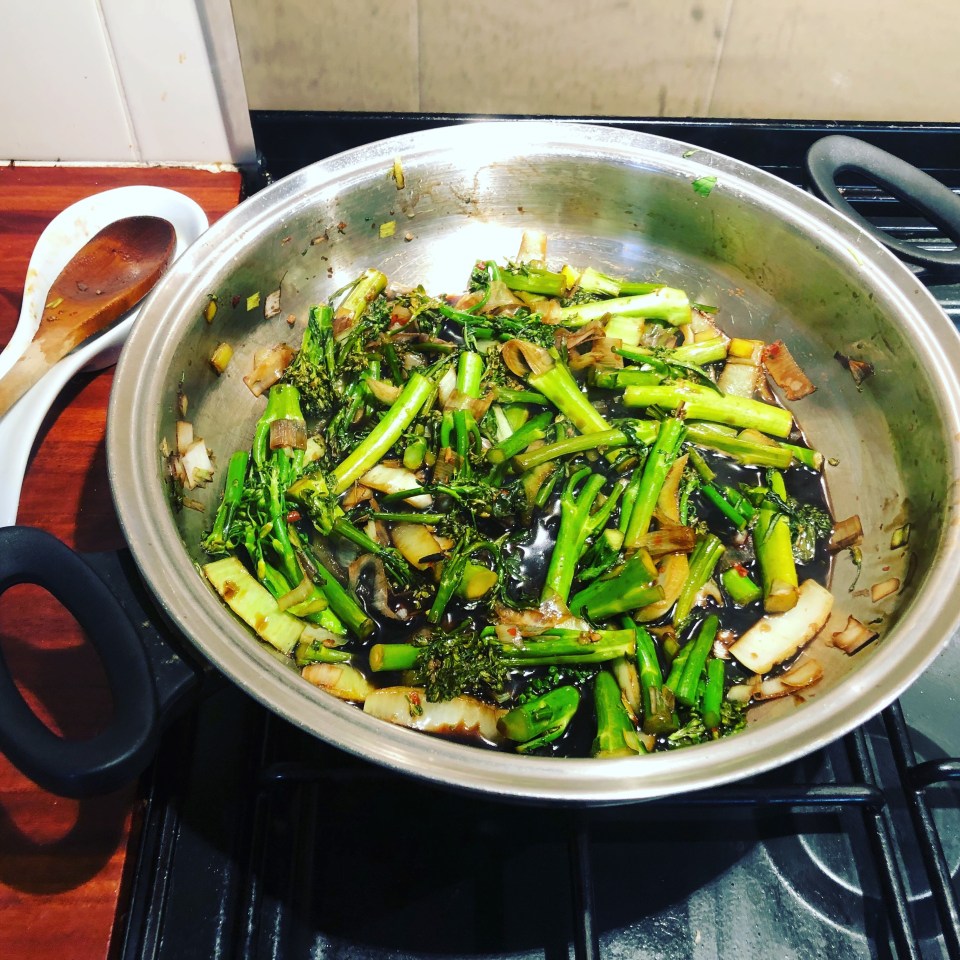
Stir Fry Greens

2 bunches of broccolini or 400g of broccoli cut into florets

2 bunches of bok choy

1/2 cup of bone broth or stock

1/2 cup soy sauce

1-2 Tablespoons of sweet chilli sauce

Combine liquid ingredients in a jug. Heat a small amount of oil in a wok and then add broccolini and stir fry for 1-2 minutes. Add liquid ingredients and bok choy and heat through and stir fry on a low heat for 10 minutes. Serve.

Turkey mince bolognaise

750g turkey mince (other mince works well too)
1 brown onion finely chopped
2 carrots peeled and diced
1 jar of passata (chopped tomatoes)
1 glass of red wine or beef stock
1 tsp chili (optional)
2 cloves garlic crushed

In a little olive oil saute onions and carrots on a low heat for a few minutes until onions are soft. Add mince, continue cooking until mince is browned and then add remaining ingredients and simmer for twenty to thirty minutes. Serve with pasta and a little grated Parmesan cheese.

Lasagne Bake

Add eggplant: 1-2 eggplants approx 500g.  Pierce the skin with a fork in a couple of places or it will explode in the oven and roast for 40-45 minutes at 180c. Scoop out the flesh and combine with the sauce about 5-10 minutes before serving.

Layer the sauce with lasagne sheets and bake in the oven covered for 30-40 minutes at 180C.

Christine Pope is an experienced naturopath and nutritionist but she frequently gets bored trying to think about what to cook for dinner too! Please add further menu suggestions in the comments below and share your inspiration.

Serves 6-8